Panama doesn't get the same surf tourism headlines as Costa Rica or Indonesia. That's exactly why I love it. The waves are just as good — in some cases better — the crowds are a fraction of the size, and the logistics, once you know the country, are surprisingly straightforward.
I've been surfing Panama for over ten years, and in that time I've watched the scene mature without losing what makes it special: genuine diversity. Two coastlines, radically different wave types, consistent surf in every month of the year somewhere in the country. Whether you've never stood on a board or you're chasing the most consequential reef break in Central America, Panama delivers.
Here are the seven best surf spots in Panama — ranked, reviewed, and described honestly from someone who surfs them regularly.
Quick Comparison
Not sure where to start? Here's every spot at a glance before we dive in.
| Spot | Coast | Level | Best Season | Wave Type |
|---|---|---|---|---|
| Santa Catalina | Pacific | Advanced | May–Oct | Reef break |
| Playa Venao | Pacific | All levels | Year-round | Beach break |
| Bocas del Toro | Caribbean | Intermediate | Dec–Mar | Reef & beach |
| Playa Barqueta | Pacific | Intermediate | Apr–Oct | Beach break |
| Playa Río Mar | Pacific | Beginner | Apr–Oct | Beach break |
| Coiba Island | Pacific | Advanced | May–Oct | Reef break |
| Secret Spots | Both | Various | Varies | Various |
1. Santa Catalina
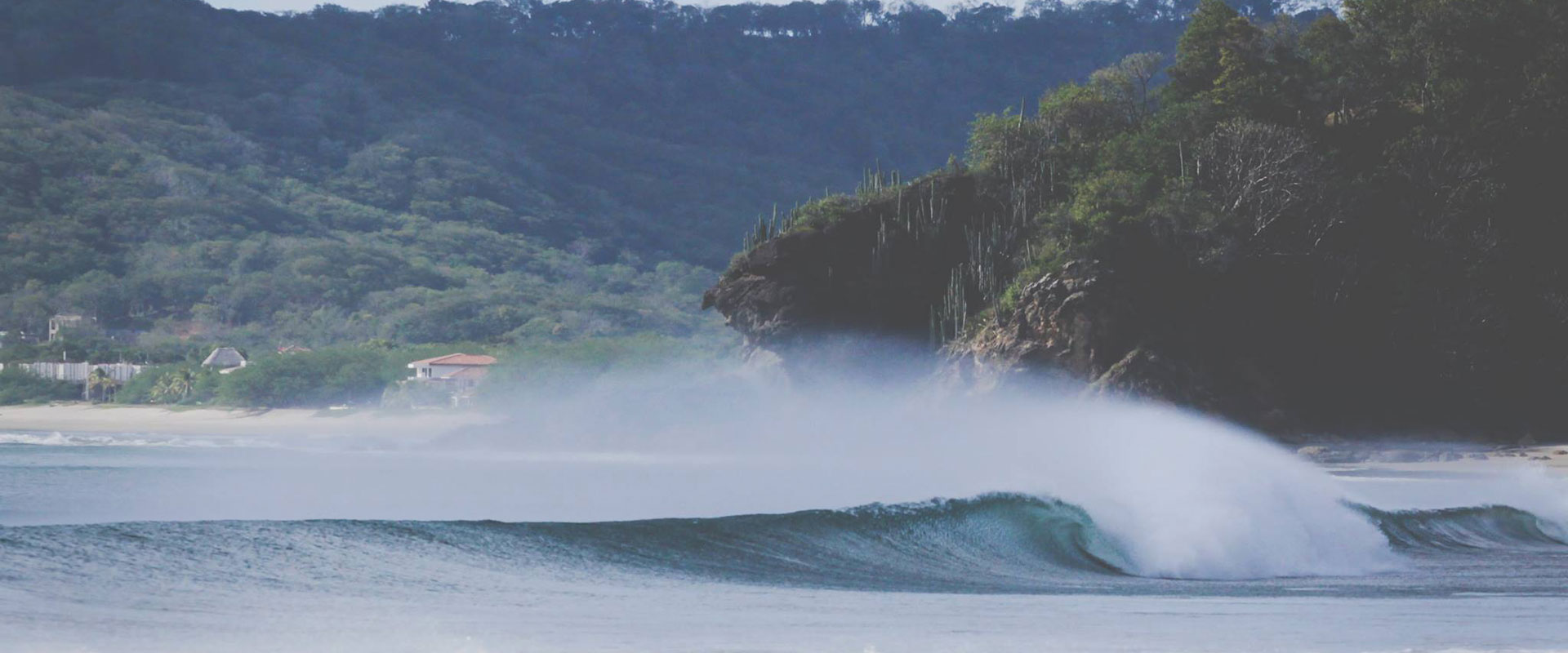
Panama's crown jewel. Santa Catalina is a powerful, hollow left-hand reef break that regularly produces barrels and heavy faces up to double overhead. It sits in a remote fishing village on the Veraguas coast, 5–6 hours from Panama City, which keeps it less crowded than its quality deserves. When the swell hits in June–August, this is world-class surfing by any measure.
Santa Catalina rewards the experienced surfer with some of the longest, most powerful rides in Central America. The main break — La Punta — is a left that peels along the point and can run for 200+ meters on a good day. There's also a beach break option near the village that's more forgiving when swell is small. During peak season, getting there early is essential — the lineup fills up by 7am on a good swell day.
2. Playa Venao

The most consistent surf beach in Panama — full stop. A 2km crescent of sandy beach on the tip of the Azuero Peninsula, Playa Venao catches swell from multiple directions and almost never goes flat. The sandy bottom makes it safe for beginners, while the right peak near the rocks produces long, quality rides that keep intermediate surfers happy for days.
If I could only take someone to one spot in Panama, it would be Venao — because it works for everyone, in almost any month, and the combination of surf, scenery and village vibe is unmatched. Read our full Playa Venao surf guide for everything you need to know.
3. Bocas del Toro
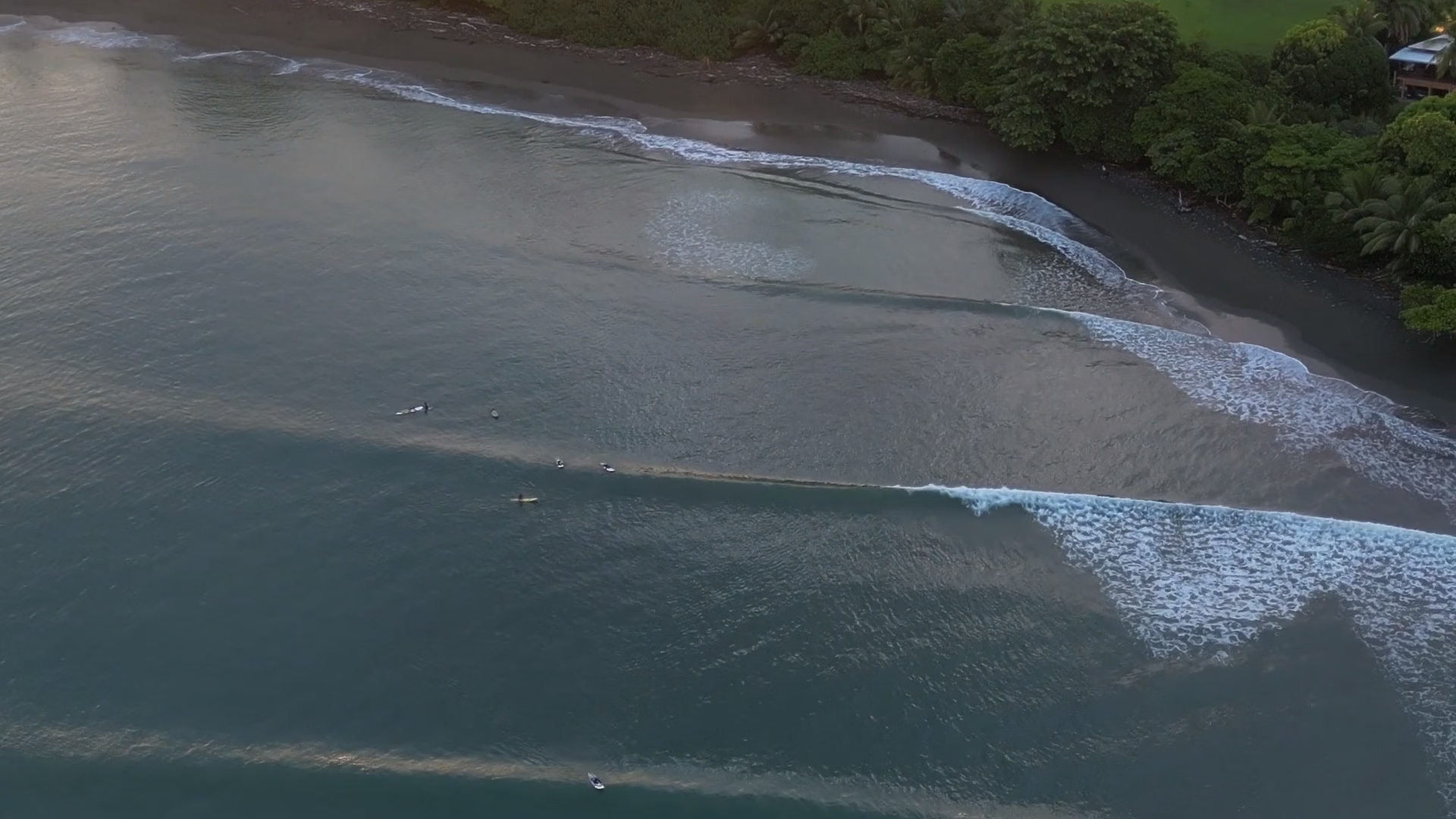
Panama's Caribbean side offers a completely different surf experience — warmer water, softer light, crystal visibility and the Afro-Caribbean culture that makes Bocas del Toro one of the most atmospheric destinations in Central America. Isla Bastimentos hosts the most consistent breaks, including Silverbacks, a heavy reef that fires when north swells arrive December through March.
Bocas is more than a surf destination — it's a full travel experience that happens to have excellent waves attached. The logistics are a bit more involved (you need to take a boat to most breaks), but that's part of what makes it special. No one travels to Bocas and comes back disappointed.
4. Playa Barqueta
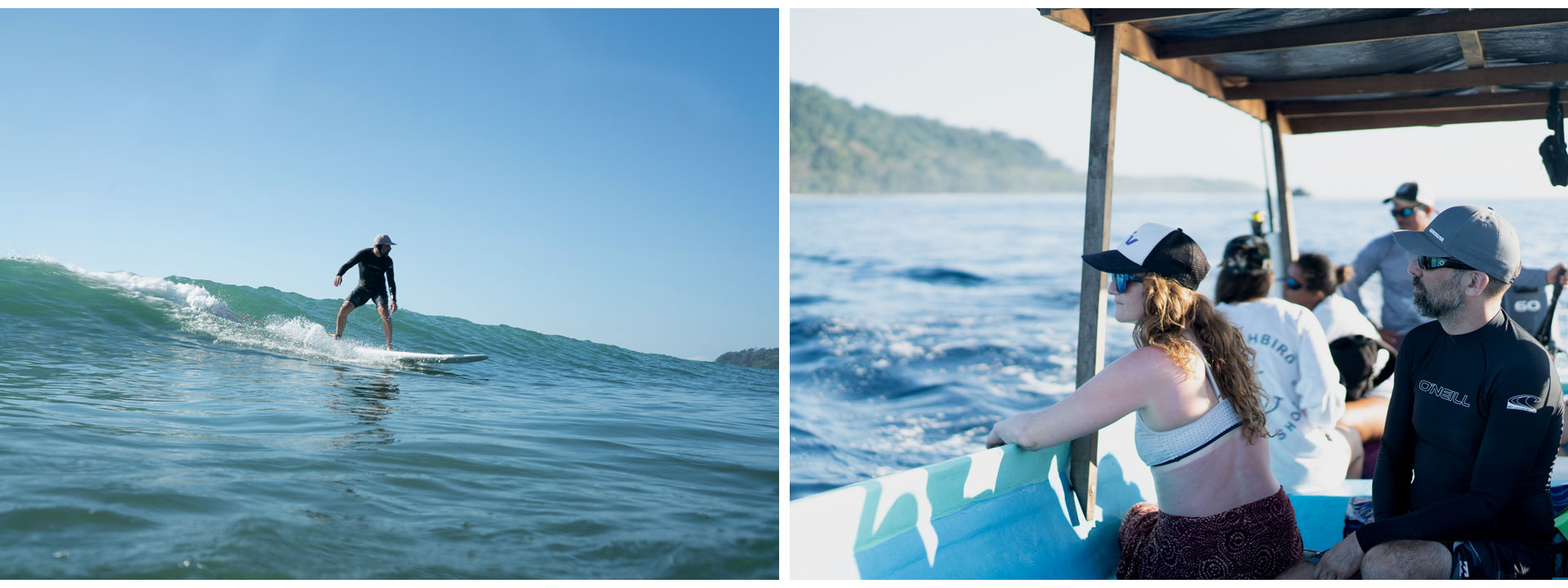
Wild, raw and almost always uncrowded. Playa Barqueta sits near David in Chiriquí Province, backed by the Barú volcano and framed by dramatic Pacific scenery. The beach break is powerful and often fast, with thick lips and strong shore break. It rewards surfers willing to put in the drive from Panama City or who are already exploring the Chiriquí highlands for coffee and hiking.
5. Playa Río Mar

The closest quality surf beach to Panama City — just 90 minutes on the Pacific Riviera. Río Mar offers a gentle, rolling beach break that's ideal for first-timers and for anyone who wants a surf day without a full multi-day trip. The waves are rarely powerful enough to intimidate, the water is warm, and there are decent lunch options in the village. A perfect introduction to Panama surfing.
6. Coiba Island
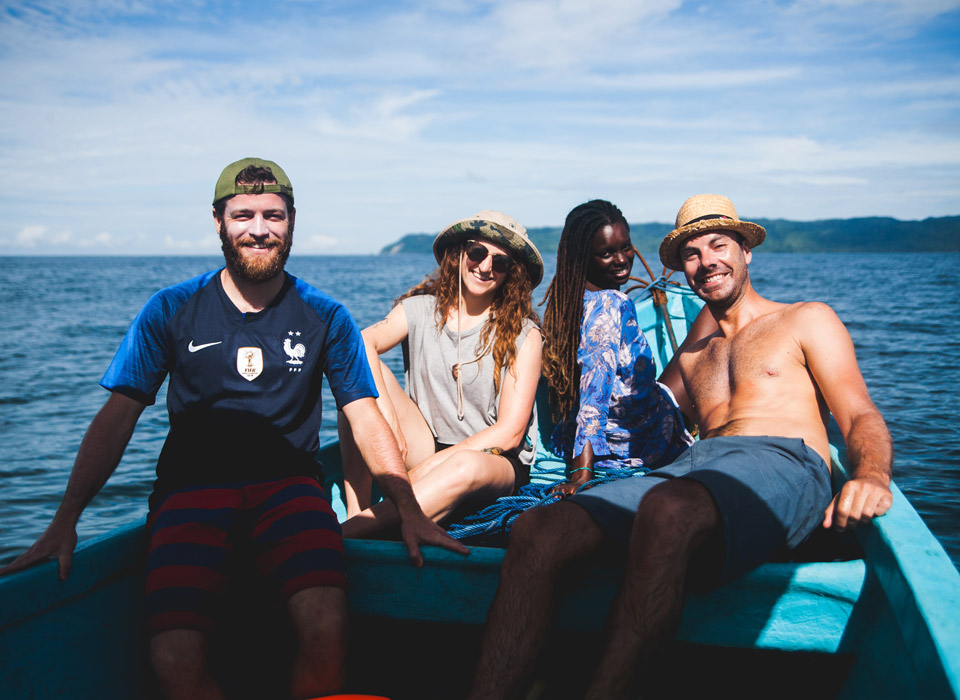
A UNESCO World Heritage site and one of the most remote surfing destinations in Central America. Getting to Coiba requires a boat trip from Santa Catalina, but the reward is pristine reef breaks surfed with almost nobody out — surrounded by whale sharks, manta rays and some of the most biodiverse marine life on the planet. This is the bucket-list trip inside the bucket-list trip.
7. Secret Spots
After ten years in the water, I know breaks that don't appear on any surf map, app or travel guide. Some of them are genuinely world-class. A few are perfect right-handers that I've surfed completely alone. These aren't things I'm going to put on a public website — but they are absolutely on the itinerary for guests who book a guided trip. Part of the value of going with a local is access to what's not published anywhere.
Which Spot Is Right for You?
The most common question I get is: I'm coming to Panama for a week — where should I surf? The honest answer depends on three things: your skill level, your travel dates, and whether you want surf to be the only focus or part of a broader trip.
🎯 Quick Recommendations
- First time surfing: Playa Río Mar (day trip) or Playa Venao (3+ days)
- Intermediate, 7 days: Playa Venao + Santa Catalina combo
- Advanced, peak season (Jun–Aug): Santa Catalina, add Coiba day trip
- Caribbean experience: Bocas del Toro (best Dec–Mar)
- Couple / mixed group: Playa Venao — great waves + great village
- Want to surf empty waves: Any guided trip — secret spots guaranteed
Panama's big advantage over most surf destinations is that you can combine spots. A ten-day trip can realistically cover Río Mar, Playa Venao, Santa Catalina and possibly a Coiba day trip — all in one itinerary, with private transport handling everything in between. That's the kind of trip that's difficult to pull off without local knowledge, and exactly what I design for every guest.