The most common planning question I get from surfers heading to Panama is simple: when should I go? The answer is more interesting than most travel guides make it sound — because Panama is one of the only countries in the Americas where the answer is genuinely almost any time, as long as you know which coast to be on.
I've been in the water here for over ten years. I know how the swells build and drop, how the wind patterns shift through the seasons, and what the surf actually looks like in October vs February vs July. This is the honest, month-by-month breakdown I wish had existed when I first started planning Panama surf trips — written from the water, not from a satellite data service.
Quick Summary: The Full Year at a Glance
The Two Coasts — Why Panama Is Different
Most surf destinations have one season. Panama has two — one per coast — and they run almost in opposition to each other. This is the single most important thing to understand when planning a surf trip here.
The Pacific coast picks up south and southwest swells generated by storm systems in the South Pacific. These swells travel thousands of miles north before hitting Panama's coastline, arriving with long period, consistent energy. The season runs April through October, peaking hard in June, July and August. This is where you'll find Santa Catalina, Playa Venao, Playa Barqueta and Playa Río Mar.
The Caribbean coast runs on an entirely different engine — North Atlantic storms generate swells that wrap south and hit the Bocas del Toro archipelago December through March. The water is warmer, the vibe is different, and the surf — particularly at Silverbacks on Isla Bastimentos — can be genuinely powerful when a strong north swell moves through.
The practical upshot: Panama has surfable waves somewhere in every month of the year. A well-planned trip can hit Pacific peaks in summer and Caribbean peaks in winter. And even in the "slow" months on each coast, Playa Venao rarely goes completely flat — its orientation and bathymetry make it one of the most consistent beach breaks in Central America regardless of the broader season.
Full Seasonal Breakdown
| Month | Pacific Coast | Caribbean (Bocas) | Go-To Spot | Notes |
|---|---|---|---|---|
| January | Slow | ⭐ Peak | Bocas del Toro | Best Caribbean month. North swells consistent. |
| February | Slow | ⭐ Peak | Bocas del Toro | Peak Caribbean. Pacific still quiet. |
| March | Building | Very Good | Both coasts | Best overlap month. Bocas still firing, Pacific waking up. |
| April | Great | Fading | Playa Venao | Pacific swell season underway. Good value, fewer crowds. |
| May | Great | Small | Venao + Santa Catalina | Underrated month. Solid swell, shoulder pricing. |
| June | ⭐ Peak | Small | Santa Catalina, Venao | Pacific season fully firing. Morning sessions crucial. |
| July | ⭐ Peak | Small | Santa Catalina, Venao | Best single month for Pacific surfing. |
| August | ⭐ Peak | Small | All Pacific spots | Consistent overhead. Rain afternoons, glassy mornings. |
| September | Great | Small | Venao, Barqueta | Swell tapering slightly but still excellent. |
| October | Variable | Small | Check forecasts | Hit or miss. Can be great, can be flat. Monitor closely. |
| November | Slowing | Small | Venao (most reliable) | Shoulder month. Good value. Venao still has some life. |
| December | Slow | Good | Bocas del Toro | Caribbean season starting. Combine with Christmas travel. |
Month by Month — The Full Breakdown
Bocas del Toro is the move. January is statistically the most consistent month for Caribbean surf in Panama. North Atlantic storm systems are at their most active and the swells wrap reliably into the archipelago. Silverbacks on Isla Bastimentos can hold overhead to double overhead surf on a good north swell. Bluff Beach on Isla Colón is working well for intermediate surfers. The Pacific side is quiet — consistent with average conditions but nothing special.
January is also one of Panama's dry season months on the Pacific side, which means Panama City and the interior are pleasant to explore. A January trip combining Bocas for surf with a few days in Panama City is an excellent combination.
Still peak Caribbean season. February continues the Bocas window — consistent north swells, warm Caribbean water and the archipelago at its most surfable. The crowds at Bocas are modest compared to what the waves deserve. Pacific is still quiet. February is a natural choice for US surfers with winter flexibility — it's peak Caribbean season and flight prices are generally lower than the summer Pacific peak.
The most interesting month on the calendar. March is the only month where both coasts can be genuinely good simultaneously — Bocas still has north swell potential in early March before it fades, while the Pacific is beginning to wake up with building south swells. A two-week trip in March covering both coasts is a genuinely compelling option and takes advantage of the overlap window before the Pacific peaks and Caribbean goes quiet.
Later in March the Pacific becomes the clear choice as swell consistency builds toward the April–May shoulder season.
The underrated shoulder season opener. April is when the Pacific swell season starts in earnest and it's consistently undervalued by surfers who assume they need to wait for peak season. Playa Venao is reliable, Santa Catalina is starting to fire on the bigger swells, and accommodation prices are lower than July–August. If your priority is wave quality with fewer crowds and better value, April is one of the smartest months to visit.
The Caribbean side is quiet by April — Bocas swells have faded and you won't get much on that coast until December.
Seriously underrated. May is one of the best kept secrets in Panama surf travel. The swell is consistent, Santa Catalina is firing regularly, Venao is excellent, and the tourist crowds haven't arrived yet. Prices are shoulder season. The rainy season is technically starting but in May it's mostly afternoon showers — mornings are good. This is the month I'd recommend to anyone who asks about beating the crowds while still getting quality surf.
The Pacific season arrives in full. June is when the South Pacific storm machine really cranks up and Panama's Pacific coast starts receiving the long-period, consistent swells that make Santa Catalina world-class. Venao is excellent. Barqueta is powerful. The morning sessions are often glassy — offshore winds are strongest before 9am and the surface is clean. Afternoons fill in with onshore, so the daily rhythm is dawn patrol, rest, optional evening check.
The rainy season is underway but don't let that put you off — the rain is afternoon and evening, not all day. Mornings are often beautiful.
The single best month for Pacific surfing in Panama. If you can only go once and want the highest probability of world-class conditions, July is it. Santa Catalina is firing consistently — overhead to double overhead on good swells, with multiple days per week of quality surf. Venao is pumping. The Coiba Island boat trip from Santa Catalina is at its best. Bring your best boards and plan early morning sessions every day.
This is peak season — accommodation fills up in advance, particularly at Santa Catalina. Book early.
Still fully in the peak window. August matches July for consistency and in some years surpasses it for the size and quality of the biggest swells. The entire Pacific coast is working — Santa Catalina, Venao, Barqueta and the secret spots all come alive. The mornings are typically glassy and the swell rarely drops below fun size for more than a day or two. Same pattern as July: get in the water early, rest in the afternoon, repeat.
Still excellent, starting to taper. September continues the Pacific season with good to great consistency, particularly in the first half of the month. Later in September swell starts to taper slightly as the South Pacific storm season winds down. Venao stays reliable. Santa Catalina is less consistent than peak months but still fires on good weeks. Crowds drop from the July–August peak and prices soften. A solid choice for anyone who missed the peak window.
Hit or miss — check the forecast before committing. October is the most variable month in Panama's surf calendar. It can be great — there are October weeks every year where the swell arrives and the surf is excellent. But it can also be flat for stretches, particularly later in the month as the Pacific swell season definitively ends. If October is your only option, focus on Venao which holds up better than Santa Catalina in the shoulder period. Monitor surf forecasts in the two weeks before your trip and have some flexibility if possible.
The quiet month — but not dead. November is the weakest month on the surf calendar for Panama. The Pacific season has ended, the Caribbean season hasn't started. Venao is your best bet — it stays more consistent than Santa Catalina in the offseason and can still produce fun waves when south swells occasionally pulse through. The upside: November is the cheapest month to visit, accommodation is easy to find and the country is quiet. If you're combining surf with travel and culture, November is a great time to explore Panama City, the highlands and the Canal with fewer tourists.
The Caribbean turns on. December marks the opening of the Bocas del Toro season as the first North Atlantic swells of the winter begin arriving. It's not as consistent as January or February — you might get one or two really good swells mixed with smaller days — but by mid-December the Caribbean coast is properly on. A December trip focused on Bocas combines well with Christmas and New Year in Panama City, which is one of the best times to experience the capital. The Pacific is quiet but Venao will still produce occasional fun waves.
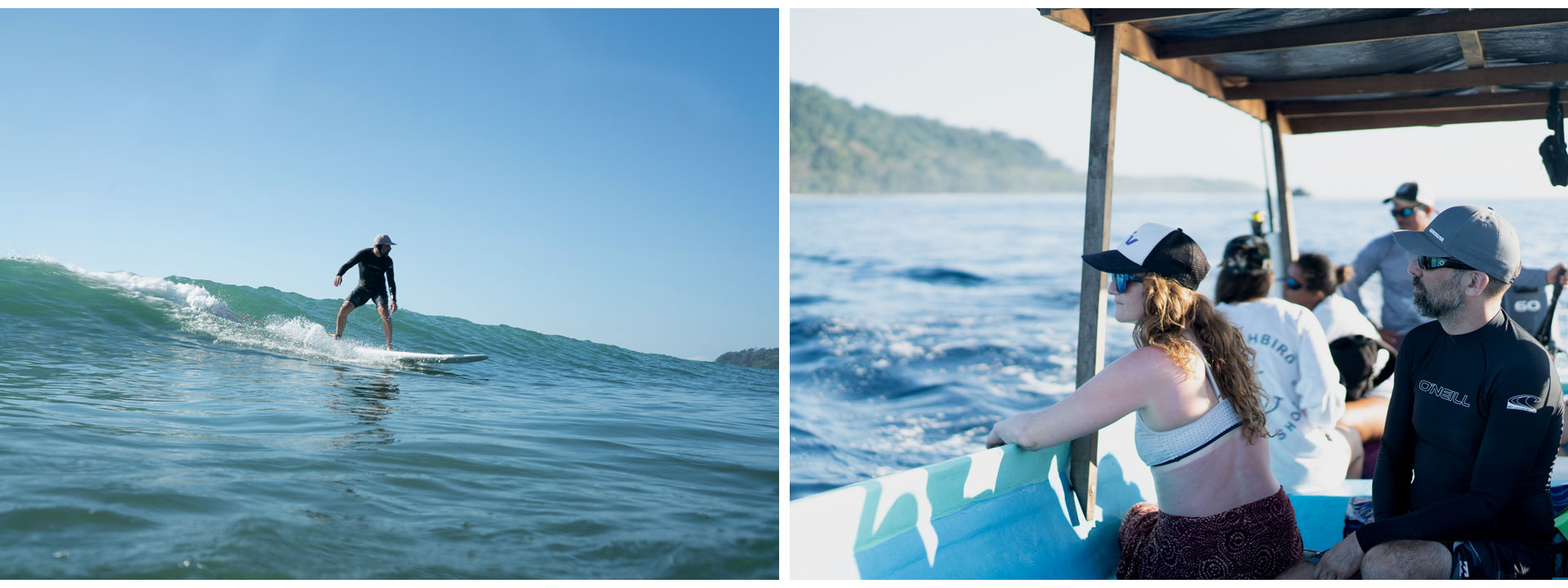
Peak season mornings in Panama — glassy conditions before the onshore fills in around 10am
Understanding Wind Patterns
Swell is only half the equation — wind is what determines whether a good swell translates into clean, surfable waves. In Panama the pattern is consistent enough that it becomes part of your daily planning once you've spent a season here.
On the Pacific coast during peak season (June–September), mornings are typically offshore — light northeast winds groom the swell surface and produce the glassy conditions you see in most surf photos from Panama. By 10–11am the onshore sea breeze fills in from the southwest and the surface chops up. By 2–3pm you're dealing with sideshore to onshore winds and the session quality drops significantly. The implication is clear: dawn patrol is not optional, it's the session. Surfers who sleep in during peak season at Santa Catalina are missing the best part of every day.
The trade winds from December to March (Panama's dry season) are stronger and more consistent — good for kitesurfers and wind enthusiasts, but they can affect surf quality on the Pacific side. The Caribbean is relatively sheltered from this pattern, which is part of why Bocas del Toro remains good in winter despite the stronger trade wind period.
The Rain Question
Every surfer asks about the rainy season. Panama's Pacific coast wet season runs roughly May through November — which overlaps entirely with the best surf season. This creates understandable concern for people who imagine grey skies and constant downpours for their entire trip.
The reality is much better than that. Panama's rain pattern is diurnal — it follows a daily cycle rather than an all-day pattern. Mornings are typically clear, sunshine and surf. Afternoon clouds build. Afternoon or evening rain arrives, sometimes heavy for an hour, then clears. Repeat. You'll get wet in the afternoon. Your morning sessions will be in conditions you'd pay good money for anywhere else in the world.
The bigger concern is lightning — during the rainy season, afternoon thunderstorms can produce dangerous lightning over the water and you should exit the lineup when storms approach. Your guide will be watching for this. It's not something to be cavalier about, but it's also not a reason to avoid the peak surf months — managed correctly, the weather adds maybe one interrupted session per week at most.
Best Month by Skill Level
🎯 Best Months by Skill Level
- Complete beginners: April, May or September — swell is consistent but not overwhelming, water is warm, guides can focus on coaching
- Intermediate surfers: May, June or September — enough swell to progress, not so much that you're out of your depth
- Advanced Pacific surfers: July or August — highest probability of world-class conditions at Santa Catalina
- Caribbean focused: January or February — peak Bocas del Toro season, consistent north swells
- Best value + good surf: April or May — shoulder season pricing, solid Pacific swell already building
- Avoid for dedicated surf trip: November — the quietest month; combine with non-surf travel if you must go
The Smart Play — Hit Both Coasts
The insight that most Panama surf guides miss is that the two-coast structure of Panama's surf season opens up a trip format that isn't available anywhere else in Central America: covering both coasts in a single itinerary.
A 12–14 day Full Immersion package in March, for example, can open in Bocas del Toro while the Caribbean swells are still running, then transition to the Pacific coast as the swell season starts building — hitting Venao and potentially early Santa Catalina before finishing. You surf two completely different oceans, two completely different wave types, two completely different cultural environments, in a single trip.
Similarly, a long trip in the June–August window can be structured as pure Pacific focus — Río Mar warmup, Venao for three or four days, Santa Catalina for the big swell sessions — with the flexibility to respond to the actual forecast each day rather than a fixed schedule. That flexibility, only possible with a local guide who knows the country and the conditions, is what turns a good surf trip into an exceptional one.