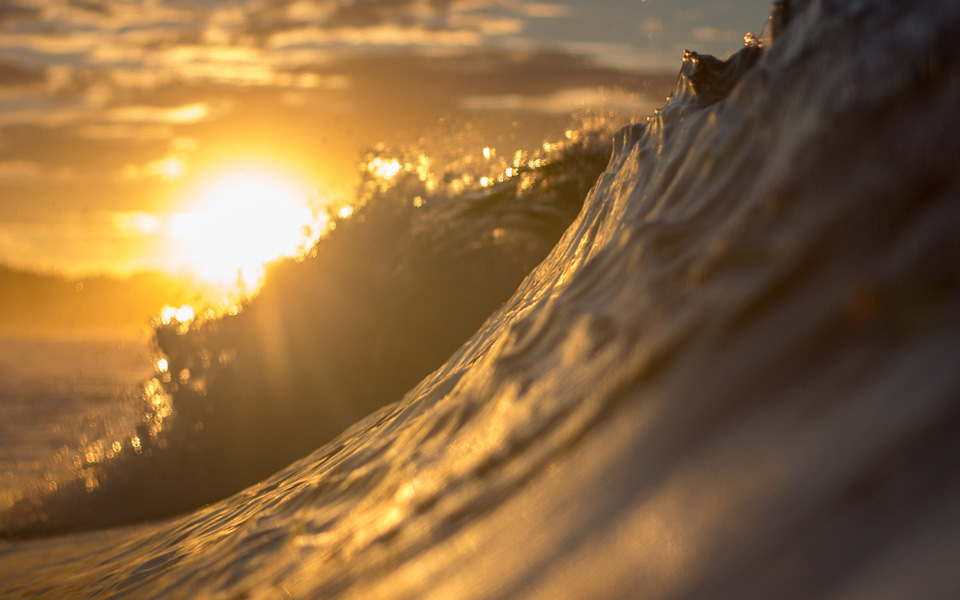
Ask most surfers where they'd go in Central America and you'll hear the same answer every time: Costa Rica. It's the default. The established choice. And it's a fine choice — but it's not the best one anymore, and it hasn't been for a while.
Surfing in Panama in 2026 means world-class waves at a fraction of the crowds, US dollars so there's no currency confusion, direct flights from most major American cities, and a surf scene that has matured enough to be properly organized without becoming overrun. Panama is what Costa Rica was twenty years ago — which is exactly why right now is the time to go.
I've been guiding surf trips here for over ten years. This is the complete guide I wish had existed when I started — everything about surfing in Panama, written honestly by someone who surfs it every week.
Why Surf Panama in 2026
Panama gets overlooked for a simple reason: it's not marketed as aggressively as its neighbours. There are no major surf brands sponsoring contests here. The travel content is thin. Most surf travel agencies push Costa Rica, Bali and Nicaragua because those are the paths of least resistance.
That gap is Panama's greatest asset for the surfer who does a little research. Here's what actually separates Panama from every other Central American option:
Panama
- US dollars — no exchange needed
- Two coasts — Pacific AND Caribbean
- Year-round surf somewhere on the map
- Direct flights from most US cities
- Significantly fewer crowds
- Unpublished secret breaks still exist
- One of Central America's safest countries
Costa Rica
- Currency exchange required
- Mainly Pacific coast surf
- Flat Caribbean side most of the year
- Often requires a connection flight
- Popular spots are busy year-round
- Spots thoroughly mapped and crowded
- Higher tourist prices across the board
None of this is to say Costa Rica is bad — it's excellent. But if you're a US-based surfer planning a trip in 2026 and you haven't seriously considered Panama, you're leaving a better option on the table.
The Best Surf Spots in Panama
Panama has over twelve established surf breaks spread across two coastlines, plus a significant number of unpublished spots known only to local guides. Here are the main destinations every surfer should know:
For a full breakdown of every spot with wave profiles, skill levels and seasonal ratings, read the complete Panama surf spots guide.
Best Time to Go Surfing in Panama
One of Panama's most underappreciated advantages is that its two coastlines peak at opposite times of year — meaning there is genuinely good surf somewhere in Panama in every single month. Understanding which coast to target when is the key to planning a great trip.
| Month | Pacific Coast | Caribbean (Bocas) | Best For |
|---|---|---|---|
| January | Slow | ⭐ Peak | Bocas del Toro |
| February | Slow | ⭐ Peak | Bocas del Toro |
| March | Building | Good | Bocas + Pacific building |
| April | Good | Fading | Venao, Río Mar |
| May | Great | Small | Venao, Santa Catalina |
| June | ⭐ Peak | Small | Santa Catalina, Venao |
| July | ⭐ Peak | Small | Santa Catalina, Venao |
| August | ⭐ Peak | Small | All Pacific spots |
| September | Great | Small | Venao, Barqueta |
| October | Variable | Small | Check forecasts |
| November | Slowing | Small | Shoulder — good value |
| December | Slow | Good | Bocas del Toro |
The smartest trip structure for a longer visit is to combine both coasts — Pacific in summer, Caribbean in winter, or a two-week itinerary that hits Venao and Santa Catalina on the Pacific before flying to Bocas for the Caribbean experience. Panama is small enough that this is entirely practical.
Surfing in Panama by Skill Level
Panama works for every level of surfer — which is unusual for a destination with genuinely world-class waves. Most places with top-tier breaks (Teahupo'o, Pipeline, Skeleton Bay) aren't really accessible to intermediate surfers. Panama has the full spectrum.
Complete Beginners
Start at Playa Río Mar for a day trip from Panama City, then build to Playa Venao for a 3–5 day stay. Both are beach breaks over sandy bottoms with warm water and no reef. First-timers routinely stand up on their first day at Venao. The water is 27–29°C year-round — no wetsuit, no cold water shock, nothing to distract from learning.
Intermediate Surfers
Playa Venao will keep you busy for a full week with its variety of peaks. Add Bocas del Toro in winter for Caribbean reef experience. Playa Barqueta offers a step up in power if you're comfortable on bigger beach breaks. The Classic Surf Week package is designed specifically around this level — two or three destinations, progressive challenges, nothing that's going to get you hurt.
Advanced Surfers
Santa Catalina is the target. In peak swell season (June–August) it produces some of the best hollow reef break in Central America — powerful, long and demanding. Add a Coiba Island boat trip for uncrowded offshore reef that barely any surfer has ever ridden. Silverbacks in Bocas del Toro when the north swells are pumping. And the secret spots I know that don't appear on any surf map — those are reserved for guided trips.
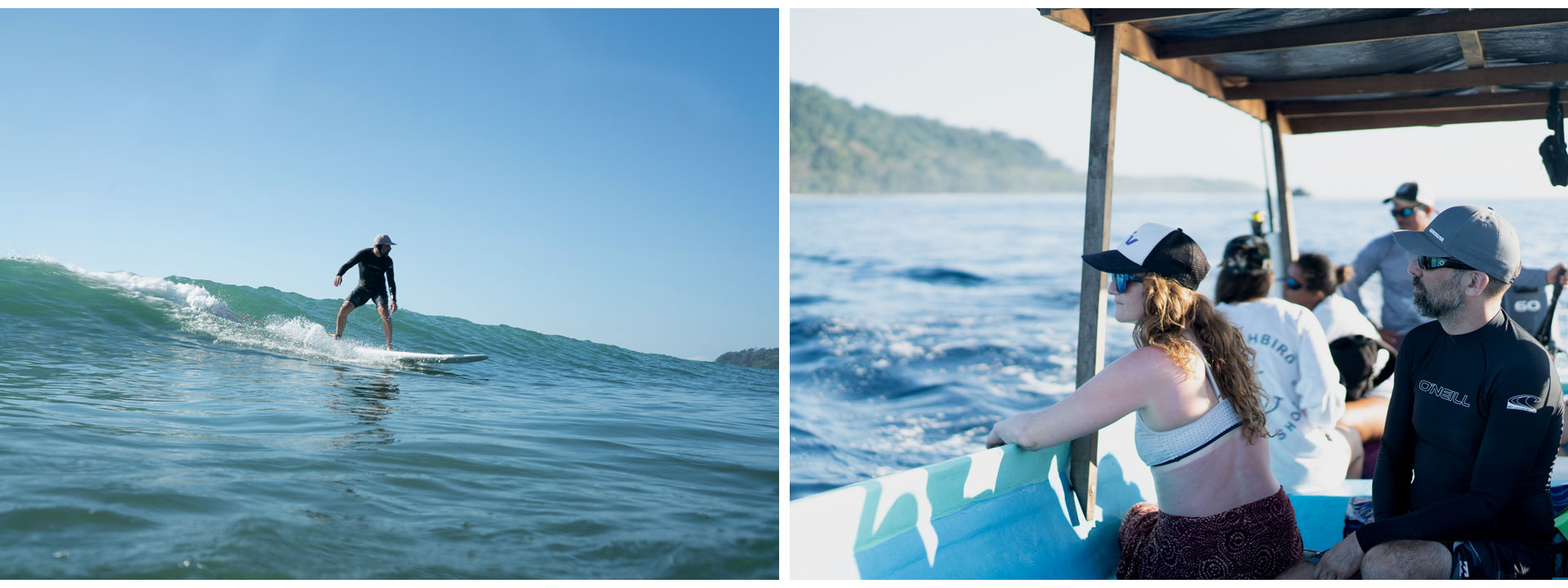
Peak season on Panama's Pacific coast — conditions like this run for weeks at a time June through August
Planning Your Panama Surf Trip in 2026
Panama is an easy country to travel in, especially for Americans. Here's what the practical planning looks like:
Flights
Panama City (PTY — Tocumen International) has direct flights from Miami (3 hours), Houston (4 hours), New York (5 hours), Los Angeles (6 hours) and most major US cities. Round trips typically run $300–500 from the East Coast. No visas required for US citizens for stays up to 180 days — just a valid passport with 3+ months remaining validity.
Currency
Panama uses the US dollar. No exchange, no conversion fees, no mental arithmetic at dinner. This is a bigger deal than it sounds when you've spent a week in Mexico or Costa Rica constantly converting. Pull cash from an ATM on arrival and you're set — cards are accepted everywhere in the city and in most surf towns.
Getting Around
Playa Río Mar is 90 minutes from Panama City. Playa Venao is 4–4.5 hours. Santa Catalina is 5–6 hours. Bocas del Toro is a 45-minute domestic flight from Albrook Airport (note: separate from Tocumen International). Roads to all main surf destinations are paved. Self-driving is viable. Private guided transport is significantly less stressful, particularly if you want to reach spots that aren't on any GPS.
What to Pack
No wetsuit needed anywhere in Panama — water temperature stays at 26–29°C year-round. Rash guard for sun protection, reef booties if you're surfing Santa Catalina or any reef break. Board rentals are available at all main spots. Airlines typically charge $30–50 each way for a surfboard bag if you want to bring your own equipment.
How Much Does Surfing in Panama Cost
Panama is genuinely better value than most comparable surf destinations. A rough breakdown for a self-guided trip runs $80–150 per person per day including accommodation, food and board rental. That covers a comfortable surf lodge, three meals and a daily rental at most spots.
💰 2026 Cost Guide
- Flights from US East Coast: $300–500 round trip
- Accommodation (surf lodge/hotel): $40–100/night
- Board rental: $20–35/day
- Food (3 meals): $25–50/day
- Local transport: $15–30/day
- All-inclusive guided — Weekend Escape (3–4 days): from $899/person
- All-inclusive guided — Classic Surf Week (7–8 days): from $1,999/person
- All-inclusive guided — Full Immersion (12–14 days): from $3,499/person
The guided packages include private transport, all equipment, accommodation, food and access to spots that self-guided travelers simply won't find. For first-time visitors to Panama in particular, the local knowledge component alone pays for the price difference.
Guided vs Self-Guided Surfing in Panama
Self-guided is absolutely viable for experienced surf travelers who've done similar trips before. Rent a 4x4 in Panama City, load the boards, head south. The main spots — Venao, Santa Catalina, even Bocas if you fly — are accessible without local help.
What you lose going self-guided: the unpublished spots, the daily swell knowledge that tells you whether to be at the right peak or the left peak or to drive 30 minutes down the coast where it's cleaner, the restaurant in the village that doesn't have a sign outside but serves the best ceviche you'll ever eat, and the relationships with locals that unlock experiences no travel app can replicate.
Every surfer who's done Panama both ways — self-guided first, then with a guide — says the same thing: the second trip was better in every dimension. Not because the spots were different, but because someone who knows the country was making decisions that a first-timer couldn't.
The Bottom Line on Surfing in Panama in 2026
Panama is the most underrated surf destination in the Americas. World-class waves, year-round surf across two coastlines, no currency issues for Americans, uncrowded lineups and a country that's safe, beautiful and genuinely welcoming. The window where this is still relatively undiscovered won't stay open forever — the surf tourism industry here is growing, and the spots that are quiet now won't be quiet in five years.
If you've been thinking about a Central America surf trip and defaulting to Costa Rica out of habit, 2026 is the year to reconsider. The waves are just as good. Everything else is better.