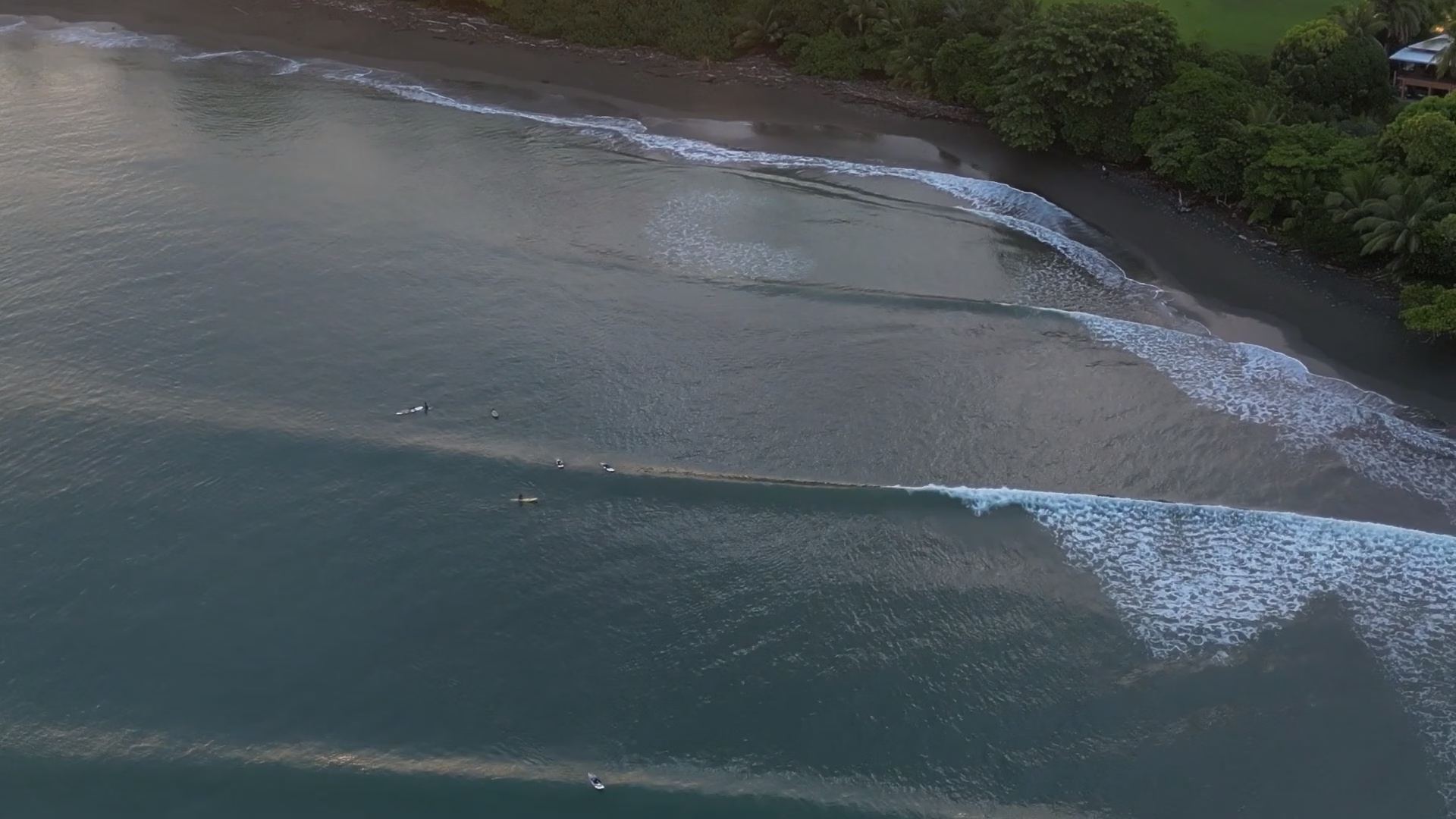
Bocas del Toro is unlike anywhere else in Panama. An archipelago of over 200 islands on the Caribbean coast, it combines genuine surf — not beginner mush, not tourist-wave surfing, but real, powerful Caribbean swell — with the kind of scenery, culture and island atmosphere that makes even flat days feel like a win. Colorful wooden buildings over turquoise water. Afro-Caribbean food that stops you mid-bite. Dolphins in the lineup. The sound of reggae from the town dock.
The surf here fires on a completely different engine to Panama's Pacific coast. While Playa Venao and Santa Catalina run on South Pacific swells peaking June through August, Bocas del Toro catches North Atlantic swells that arrive December through March. Two coasts, two seasons, one country — it's what makes Panama uniquely versatile for surf travel.
Here is every surf break in the Bocas archipelago worth knowing about, described honestly from someone who's surfed them all.
1. Silverbacks
The crown jewel of Bocas del Toro. Silverbacks is a heavy left-hand reef break on the exposed northern shore of Isla Bastimentos — Panama's most powerful Caribbean wave. When a solid North Atlantic swell arrives in January or February, Silverbacks can hold waves up to double overhead with hollow, fast sections and a lip that throws out hard. It's not a wave to take lightly, and it's not a wave for anyone who hasn't surfed serious reef before.
Silverbacks requires commitment in every sense — the boat ride out, the paddle through the channel and the swell reading in the lineup. On a big day the sets arrive in fast, powerful lines and the reef comes up quickly on the inside. The reward is one of the most exhilarating left-hand waves in the Caribbean. When it's on and you're in position, the rides are long, hollow and legitimately world-class by any standard.
Getting there requires a 25-minute water taxi from Bocas Town to the north shore of Isla Bastimentos. There is no road access. A local guide who knows the break — where to sit, how the swell refracts around the point, where the current runs — makes a significant difference both in terms of wave count and safety.
2. Bluff Beach
The most accessible quality break in Bocas del Toro. Bluff Beach stretches along the exposed eastern shore of Isla Colón — the main island — and produces consistent beach break waves that work well for intermediate surfers and can challenge advanced surfers on bigger days. Unlike Silverbacks, Bluff is reachable without a boat: it's a 20-minute taxi or bicycle ride from Bocas Town on a paved road. On a solid swell it produces punchy, fun peaks along a long stretch of beach.
Bluff is where most surfers spend the majority of their sessions in Bocas. It's reliable, fun and doesn't require the logistical overhead of a boat day. The beach is long enough to spread out even when the town is busy. There are sections that suit longboards on smaller swells and sections that get genuinely fast and critical on bigger days. Worth noting: the currents at Bluff can be strong on bigger swells, particularly at the northern end of the beach — stay aware of where you're drifting.
3. Dumpers
A short, punchy shore break close to Bocas Town that breaks over a shallow bottom and delivers heavy, fast rides when the swell is right. Dumpers earns its name — it throws hard and drops fast. Sessions are short but intense. On a good day it produces legitimate barrel sections that advanced surfers chase. On a bigger swell it becomes genuinely consequential and is not a wave for intermediate surfers who aren't comfortable being thrown.
4. Playa Punch
The most beginner-friendly break in Bocas del Toro. Playa Punch is a sheltered beach break south of Bocas Town that picks up less swell than the exposed north-facing beaches — which makes it gentler and more forgiving when the rest of the archipelago is firing too hard for newcomers. Surf schools operate here regularly and the break is suited to foam boards and first lessons. When the swell is small, it's the right starting point for anyone still building confidence in the water.
Best Time to Surf Bocas del Toro
Bocas del Toro runs on North Atlantic swells — the opposite engine to Panama's Pacific coast. This gives the archipelago a distinct season that requires careful planning:
| Month | Surf Conditions | Swell Source | Verdict |
|---|---|---|---|
| January | ⭐ Peak | North Atlantic storms | Best single month — consistent overhead swell |
| February | ⭐ Peak | North Atlantic storms | Peak season continues, highly consistent |
| March | Very Good | Fading north swells | Still excellent early March, tapers late |
| April | Fading | Inconsistent | Hit or miss — check forecasts |
| May–Nov | Small–Flat | Limited | Not recommended as a dedicated surf trip |
| December | Good | First north swells | Season opening — less consistent than Jan/Feb |
The window is clear: December through March, with January and February as the undisputed peak. Outside this window you can still visit Bocas — the snorkelling, wildlife, culture and island atmosphere are extraordinary year-round — but if your primary goal is surf, time it for the north swell season.
One important nuance: Bocas del Toro is also one of the rainiest parts of Panama, and unlike the Pacific coast's predictable afternoon rain pattern, the Caribbean side can receive rain at any time. September and October are actually Bocas's drier months, though ironically that's also when the surf is flattest. Pack accordingly and don't expect the same sunny morning reliability you'd get at a Pacific spot.
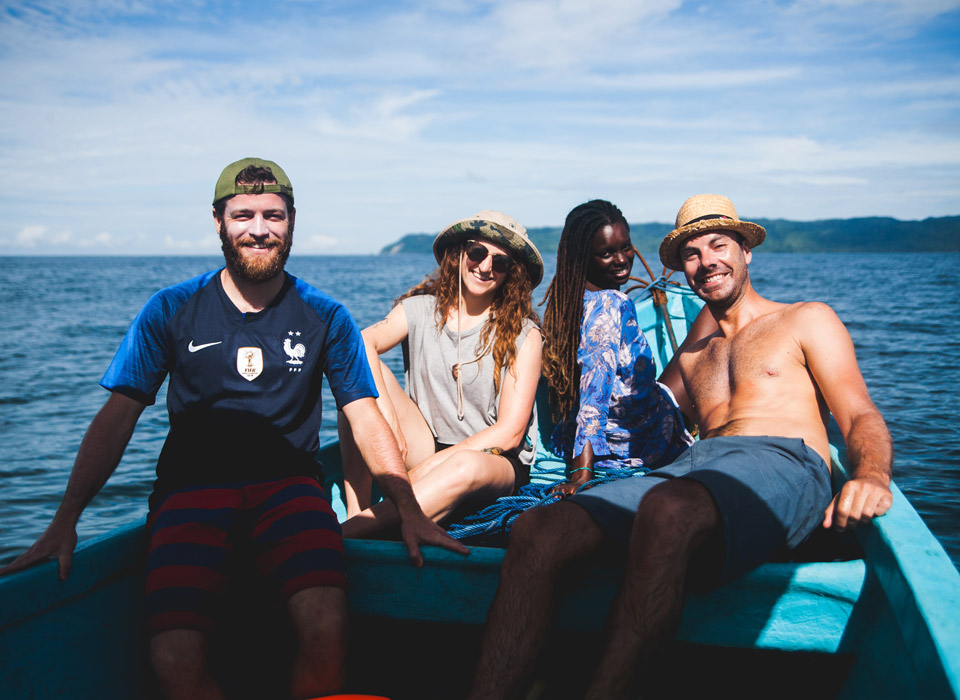
Getting to the breaks in Bocas means starting every surf day on the water — which is exactly as good as it sounds
Getting to Bocas del Toro
Bocas del Toro is on the Caribbean coast — a completely different side of the country from Panama City. There are two ways to get there:
By air — the fastest and by far the most practical option. Air Panama operates daily flights from Albrook Airport (Marcos A. Gelabert) in Panama City to Bocas del Toro, taking approximately 45 minutes. Fares run $80–120 each way. Critically: Albrook is a separate airport from Tocumen International where international flights land. If you're connecting from an international flight, budget extra time to cross the city between airports — it can take 30–60 minutes depending on traffic.
Overland + water taxi — a bus from Panama City to Almirante takes around 8–9 hours, connecting to a 30-minute water taxi across the Almirante Bay to Bocas Town. It's significantly cheaper and a reasonable option if you have time and want the journey to be part of the experience.
Once in Bocas Town on Isla Colón, everything within the archipelago moves by water taxi. Taxis run frequently from the main dock and can be chartered for full-day surf excursions to any break. Bluff Beach is the exception — it's on Isla Colón itself and reachable by road taxi or bicycle.
Surf Logistics in the Archipelago
Surfing Bocas del Toro is inherently more logistically complex than Panama's Pacific spots — and that's part of what makes it special. Every surf day starts on a boat, often with dolphins visible in the channel, usually with a view of jungle-covered islands and turquoise water so clear you can see the reef ten metres down.
⚡ Quick Facts — Bocas del Toro
- Location: Bocas del Toro Province, Caribbean Coast
- Getting there: 45-min flight from Panama City (Albrook Airport)
- Peak surf season: December–March
- Water temperature: 28–30°C year-round — warmest in Panama
- No wetsuit needed: Ever. Warmest water in the country.
- Getting to breaks: Water taxi from Bocas Town dock
- Bluff Beach: Only break reachable without a boat
- Silverbacks: Advanced only — shallow reef, strong current
- Best for beginners: Playa Punch or Bluff on small swell days
- Crowds: Lower than Pacific spots — archipelago spreads surfers out
Bocas Beyond the Surf
This is where Bocas genuinely separates itself. Even if the swell goes flat for two days, nobody on a Bocas trip is sitting around disappointed. The archipelago has over 200 islands and cays, most of them uninhabited. Snorkelling on Coral Cay reveals some of the healthiest reef in the Caribbean — visibility that makes you feel like you're in a documentary. Leatherback and olive ridley turtles nest on the beaches of Isla Bastimentos between April and October. Sloths hang in the mangroves twenty metres from the dock in Bocas Town.
The food and culture deserve their own paragraph. Bocas Town is an Afro-Caribbean community with its own distinct identity, language and cuisine. Rondon — a rich Caribbean coconut broth with fish, plantains and root vegetables — is one of the best things you'll eat in Panama. The waterfront restaurants at sunset, cold beer in hand, with the islands across the bay turning gold — this is what stays with people long after the trip ends.
Who Should Surf Bocas del Toro
The honest answer spans the full range. Advanced surfers should put Silverbacks on their bucket list — when the swell arrives in January or February it's one of the best left-hand reef breaks in the Caribbean, and the setting alone justifies the trip. Intermediate surfers will have a genuinely excellent time at Bluff Beach and Dumpers, with the option to watch Silverbacks from the channel and gauge whether they're ready. Beginners have Playa Punch and small-swell Bluff days — both perfectly capable of providing progression sessions in warm, clear water with no wetsuit required.
Bocas is also, consistently, the trip that satisfies mixed groups best. The person who doesn't surf has as much to do as the person who does. The combination of surf, snorkelling, wildlife, culture and extraordinary food makes it genuinely complete as a travel destination — not a surf camp with beaches attached, but an entire world with surf as one of its many highlights.