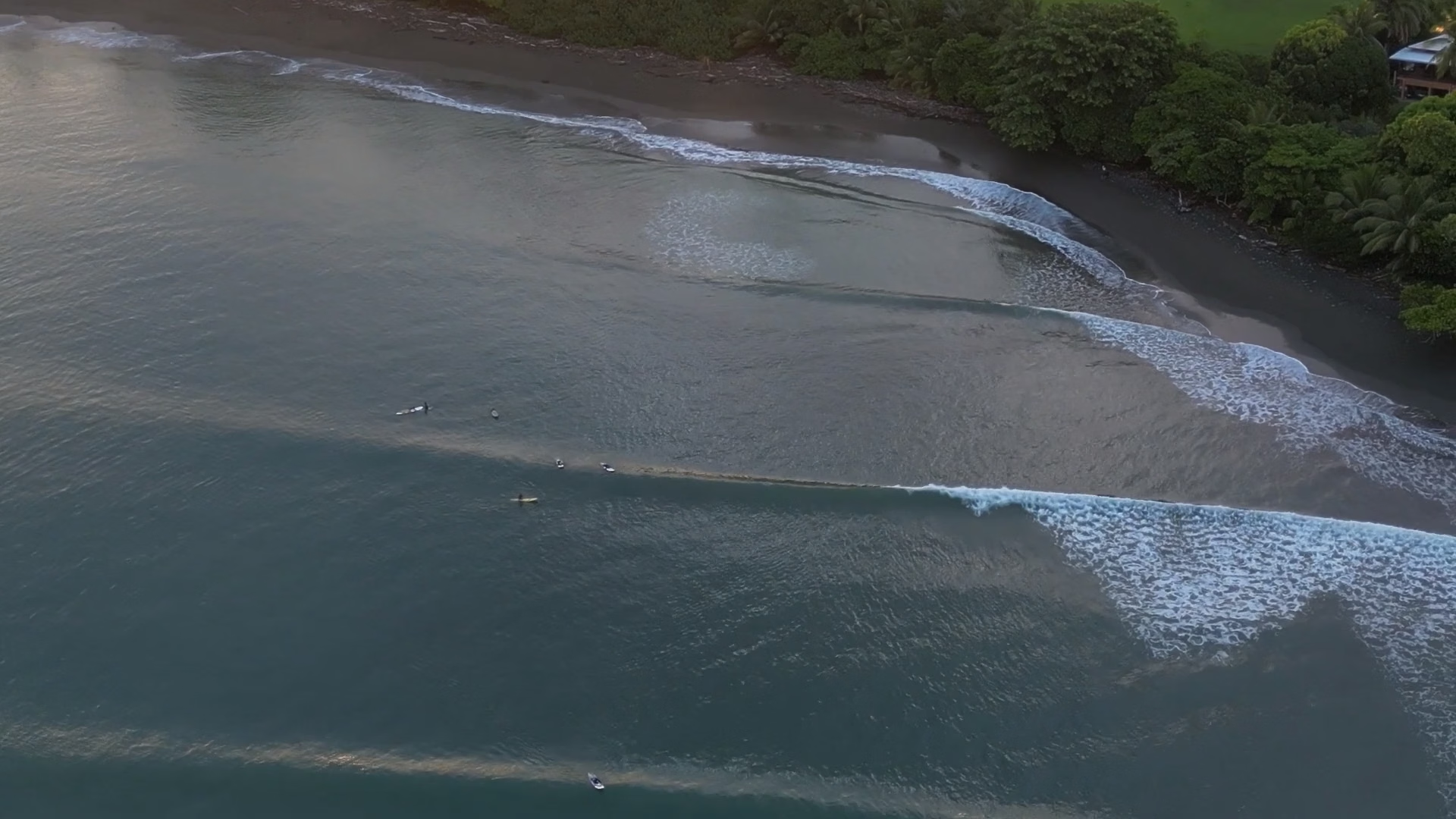
Ask most surfers about Panama and they'll tell you about Santa Catalina on the Pacific — powerful reef break, June through August, world-class when it's on. And they're right. But there's an entirely different surf world on the other side of the country, and the people who find it rarely stop talking about it.
Surfing in Bocas del Toro is one of the most complete experiences in Central American surf travel. It's not just about the waves — though the waves are genuinely excellent in season. It's about arriving to an archipelago of 200+ islands draped in jungle, gliding by boat to surf breaks with dolphins in the channel, eating Afro-Caribbean food that you'd travel for on its own, and surfing in water so warm and clear you can watch the reef passing beneath you on the paddle out. Bocas is an experience, and surf is the reason to time your trip right.
The Waves — What Surfing Bocas Actually Looks Like
Bocas del Toro's surf runs on North Atlantic swells — storm systems that build in the North Atlantic during winter and send energy sweeping south and west into the Caribbean. This gives the archipelago a fundamentally different surf character to Panama's Pacific coast. The swells are generally shorter period than Pacific groundswells, which means the waves can be punchier and more unpredictable — but on the right day, at the right break, Bocas produces genuine world-class surf.
The water temperature is the warmest in Panama at 28–30°C year-round. No wetsuit, ever. The visibility underwater is extraordinary. And every surf day starts the same way — on a boat, with the islands sliding past and the horizon opening up ahead. That alone is worth a lot.
For a full breakdown of every break with wave profiles, depth ratings and skill assessments, read the complete Bocas del Toro surf spots guide.
The Bocas del Toro Surf Season
This is the most important thing to understand about surfing in Bocas del Toro: the season is specific, and going outside it is a gamble. Unlike Playa Venao which surfs year-round, or Santa Catalina which has a reliable six-month Pacific window, Bocas has a tighter window driven entirely by North Atlantic swell activity.
January and February are the peak months. This is when the North Atlantic storm machine is most active and swells arrive in Bocas with the most consistency and power. Silverbacks fires. Bluff is pumping. It is legitimately the best surf in the Caribbean for these two months at this latitude.
December is the season opener — you'll get swells but they're less consistent than January. Good for a trip that combines Christmas and New Year in Panama City with the Caribbean opening of the surf season. March is still worth it, particularly the first half — some of the year's best swells can arrive in March. The second half of March is less reliable. April is increasingly hit or miss — it can surprise you, but I wouldn't fly specifically for surf in April without checking the extended forecast first.
May through November is not surf season in Bocas. The archipelago can go flat for weeks at a time. Visit for the snorkelling, the wildlife, the food, the vibe — but don't plan your trip around surf.
Bocas del Toro vs Pacific Surf — What's Different
Bocas del Toro
- Caribbean culture and island atmosphere
- Warmest water in Panama — 28–30°C
- Peak season: December–March
- Every surf day starts on a boat
- Shorter period, punchier swells
- Extraordinary snorkelling and wildlife
- 45-minute flight from Panama City
- Unique Afro-Caribbean food and culture
Pacific Coast
- More powerful, longer-period groundswells
- Peak season: June–August
- Playa Venao surfs year-round
- Drive-to surf at most spots
- Santa Catalina — best reef in Panama
- More consistent swell at peak
- 4–6 hour drive from Panama City
- More established surf infrastructure
The honest comparison: the Pacific coast at peak season (July at Santa Catalina) produces more powerful, more consistent surf than Bocas at its best. But Bocas offers something the Pacific doesn't — an island experience that is genuinely extraordinary. Most surfers who've done both say they're incomparable, not competing. A full Panama surf trip covers both coasts — Pacific for raw wave quality, Bocas for everything the archipelago brings around the surf.
Getting to Bocas del Toro
Bocas del Toro is on the Caribbean coast — a completely different side of Panama from the Pacific surf spots. Getting there requires either a flight or an overland journey.
By air — the right choice: Air Panama flies daily from Albrook Airport (Marcos A. Gelabert — not Tocumen International where international flights land) to Bocas Town. The flight takes 45 minutes and costs $80–120 each way. If you're connecting from an international flight at Tocumen, budget 30–60 minutes to cross Panama City between airports depending on traffic.
Overland: A bus from Panama City to Almirante takes 8–9 hours, then a 30-minute water taxi to Bocas Town. Significantly cheaper and an adventure in itself if you have the time.
Once in Bocas Town, everything moves by water taxi. The main dock is the hub — taxis depart regularly and can be chartered for private surf excursions. Bluff Beach is the only surf break on the island itself and reachable by road taxi or bicycle without getting on a boat.
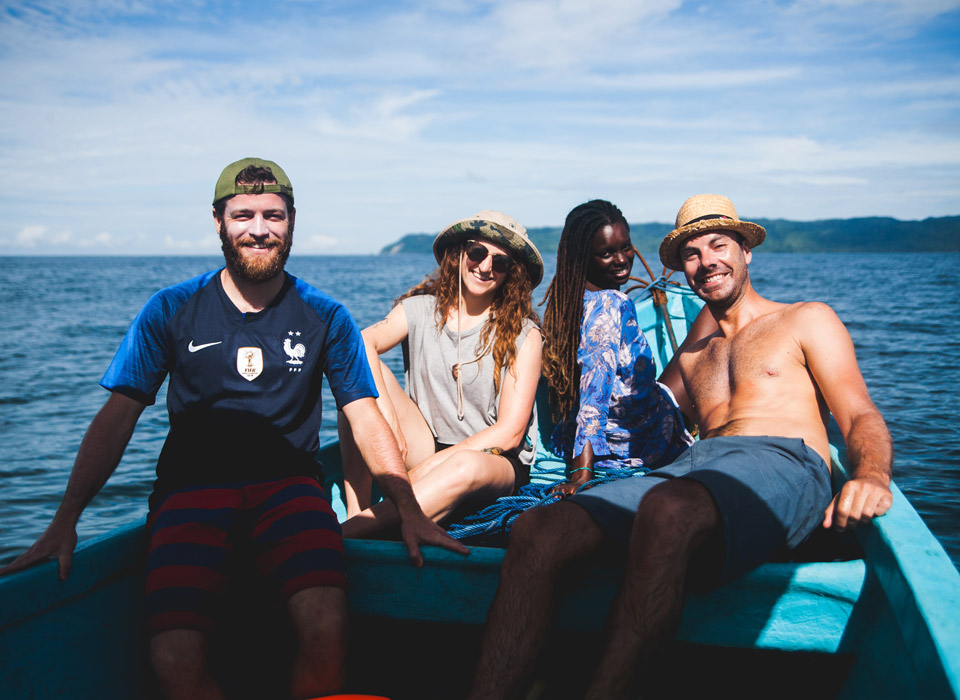
Every surf day in Bocas starts on the water — which adds something to the experience that land-based spots simply can't replicate
Planning Your Bocas Surf Trip
📋 Bocas del Toro Surf Trip Essentials
- Best months: January and February — peak North Atlantic swell season
- Also good: December (opening), March first half (still firing)
- Avoid for surf: May through November — small to flat most weeks
- Flight: 45 min from Panama City Albrook Airport, $80–120 each way
- Water temp: 28–30°C year-round — warmest surf in Panama, no wetsuit ever
- Getting to breaks: Water taxi from Bocas Town dock — runs all day
- Beginners: Playa Punch, small-swell Bluff Beach
- Intermediate: Bluff Beach, Dumpers on moderate swells
- Advanced: Silverbacks when the north swell fires January–February
- Boards: Rentals available in Bocas Town — bring your own for reef breaks
- Combine with Pacific: A 12–14 day trip can cover both coasts in one itinerary
Beyond the Surf — Why Bocas Is Worth It Even on Flat Days
A flat day in Bocas del Toro is a genuinely good day by any other standard. The snorkelling on Coral Cay is some of the best in the Caribbean — visibility up to 20 metres, healthy reef systems, and enough marine life to fill a morning without covering half the area. Dolphins appear in the channels between islands with striking regularity. Sea turtles nest on the beaches of Isla Bastimentos between April and October.
Bocas Town itself is a destination. It's an Afro-Caribbean community with its own history, culture and food that sets it apart from anything on Panama's Pacific coast. Rondon — a coconut milk broth with fish, plantains and root vegetables slow-cooked until everything falls apart — is the dish that stops conversations when it arrives at the table. The waterfront restaurants in the evening, with the islands lit up across the water, are the kind of thing you plan return trips around.
The practical implication for surf trip planning: even if your timing is slightly off and the swell doesn't cooperate for a day or two, you won't be sitting around wishing you were somewhere else. That's harder to say about many surf destinations. Bocas earns its place on the itinerary even when the ocean isn't performing.